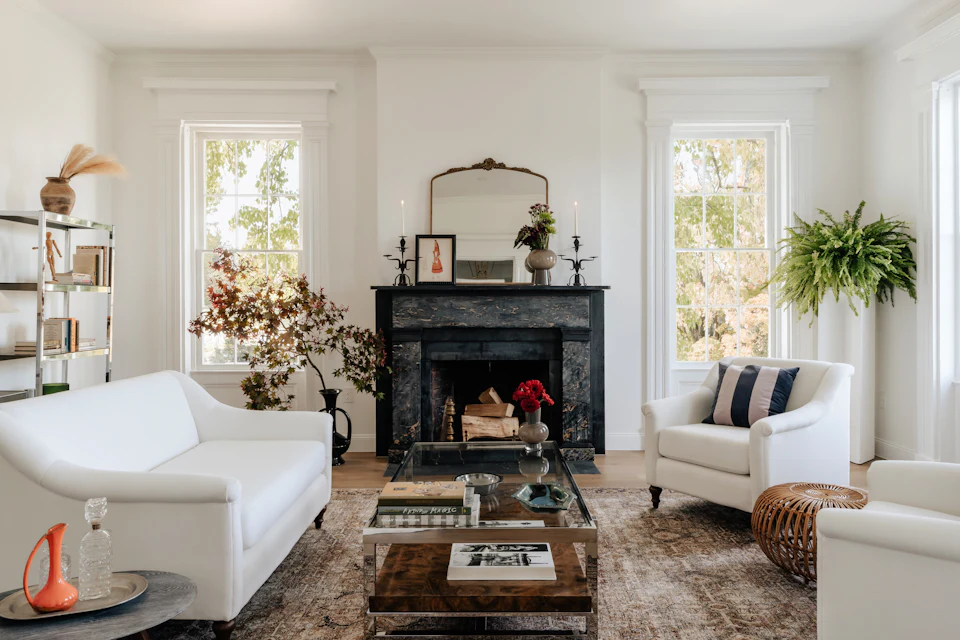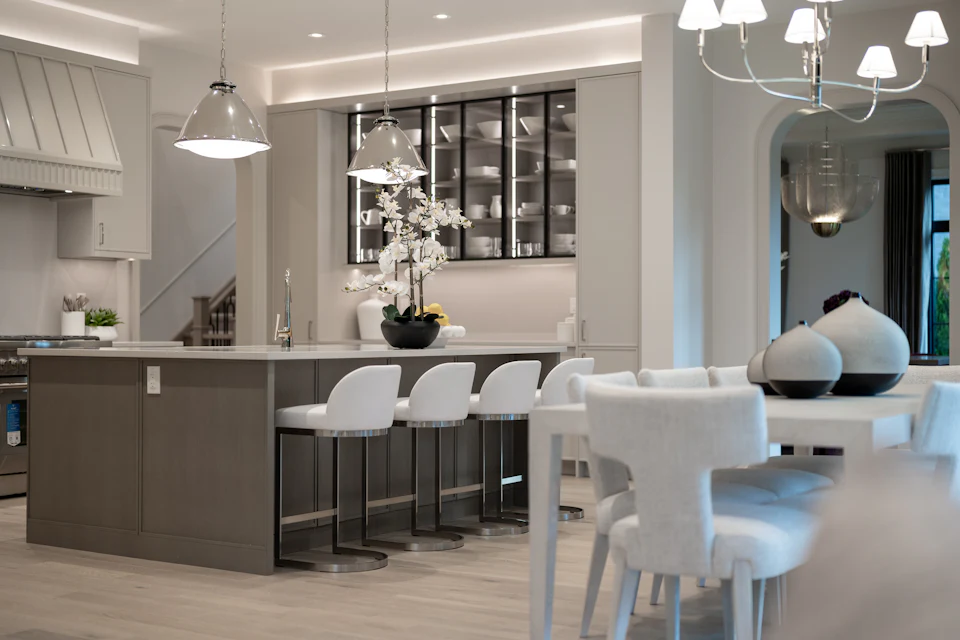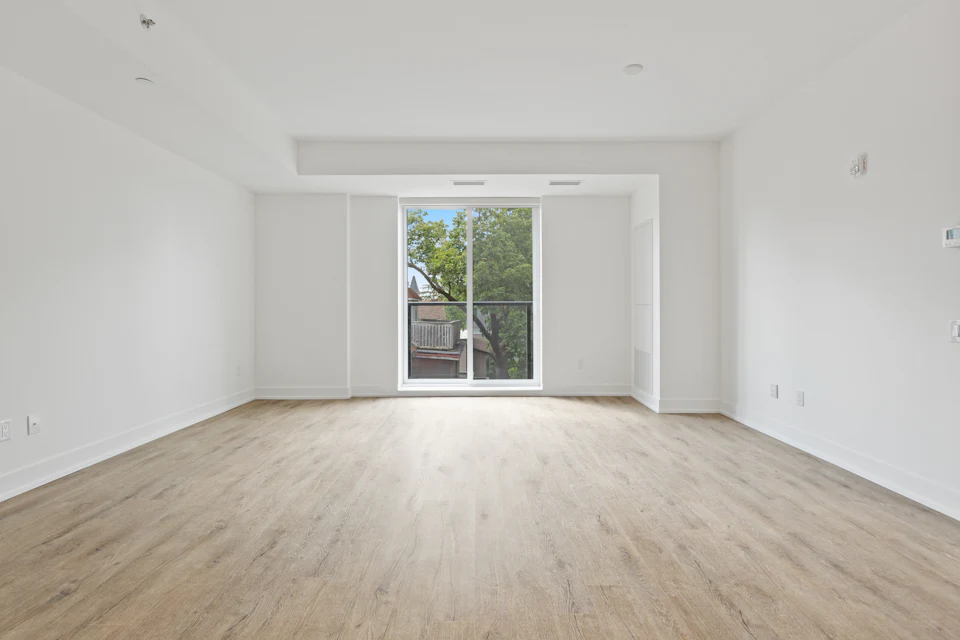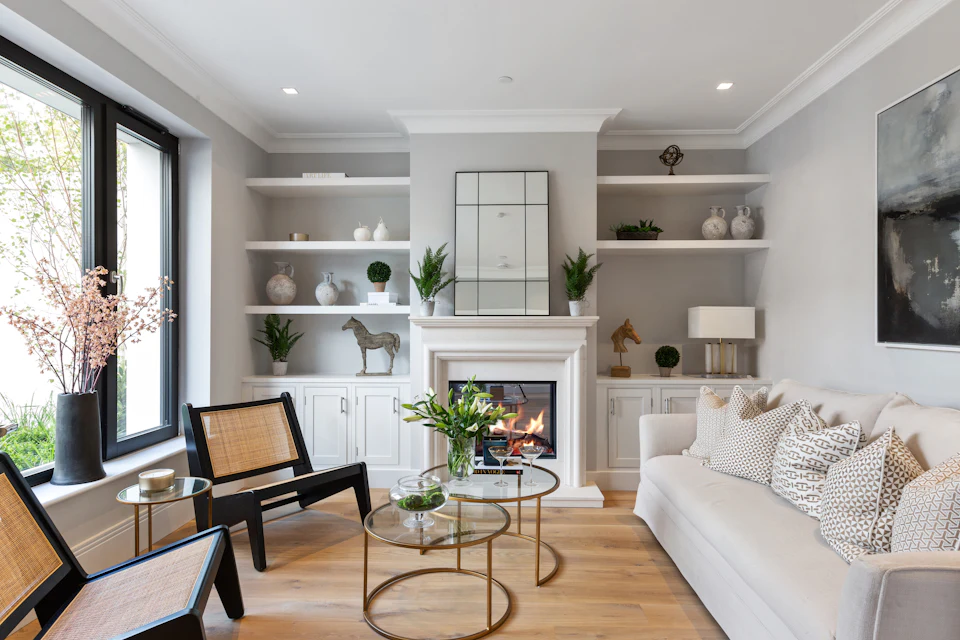
Both vacant and occupied staging share the same goal: helping buyers connect with a home. The difference is the starting point — an empty property, or one that’s still lived in.
Vacant home staging
Vacant staging furnishes and styles an empty property. The stager brings in everything the rooms need to feel complete:
- Furniture sized and arranged for each room
- Artwork and wall décor
- Rugs, lamps and lighting
- Bedding, pillows and textiles
- Accessories that add warmth and personality
Best for: homes that are already empty, renovations and flips, new construction, estate sales and relocations.
Occupied home staging
Occupied staging works with what the homeowner already owns. The stager evaluates each room and recommends — and often implements — changes such as:
- Furniture placement and flow
- Decluttering and depersonalizing
- Accessories, artwork and lighting
- Room functionality (for example, turning a catch-all room into a clear office or guest room)
- Color and paint improvements
- Items that should be removed or added
Best for: sellers living in the home during the sale, homes with good furnishings that need editing, and listings on a tight timeline.
How to choose
Ask yourself:
- Will you be living in the home while it’s listed? If so, occupied staging is usually the natural fit.
- Do your furnishings suit the home and its likely buyer? If they’re dated, oversized or highly personal, supplemental pieces may help.
- Is the home empty? Vacant staging gives buyers the reference points they need.
Many projects blend both approaches — for example, occupied staging with a few rented pieces to complete a key room.
The common thread
Whichever approach you choose, the best staging feels natural, highlights the home’s strengths and gives every room a clear purpose. If you’d like a recommendation, schedule a consultation and we’ll help you decide.